
Understanding Hoarding Disorder: A Family’s Guide to Compassionate Support and Professional Help
Summary
After 20+ years and appearing on A&E’s “Hoarders,” we know hoarding disorder isn’t about being messy; it’s a medical condition affecting entire families. This guide covers supporting loved ones with compassion, handling inherited hoarding properties, and knowing when professional help becomes necessary. You’ll learn what actually works (and what makes things worse), how our cleanup process protects both safety and dignity, and why some situations need more than muscle, they need understanding.
Understanding Hoarding Disorder: What Missouri & Illinois Families Need to Know (From the Team That’s Actually Been There)
When someone you love struggles with hoarding disorder, the weight of accumulated possessions often feels lighter than the emotional burden families carry. After appearing on A&E’s “Hoarders” and spending over 20 years helping families navigate these sensitive situations across Missouri and Illinois, we’ve learned that understanding hoarding disorder isn’t just about the stuff—it’s about the people behind it and the families who love them.
What You’ll Learn in This Guide:
- The real difference between clutter and hoarding disorder
- How to approach a loved one with compassion (and what never to say)
- When professional intervention becomes necessary
- What to expect during a hoarding cleanup process
- How inherited hoarding situations can be handled with dignity
- Why our A&E experience taught us patience matters more than speed
Whether you’re in Columbia watching a parent’s home fill beyond capacity, dealing with an inherited property at Lake of the Ozarks, managing a complex situation in St. Louis, or facing rural challenges around Alton, Illinois—every hoarding situation is unique, but you don’t have to face it alone.
We’ve seen families transform from overwhelmed and exhausted to hopeful and reconnected. It’s possible, it takes time, and it absolutely requires the right approach.
What Is Hoarding Disorder? (It’s More Complex Than Most People Think)
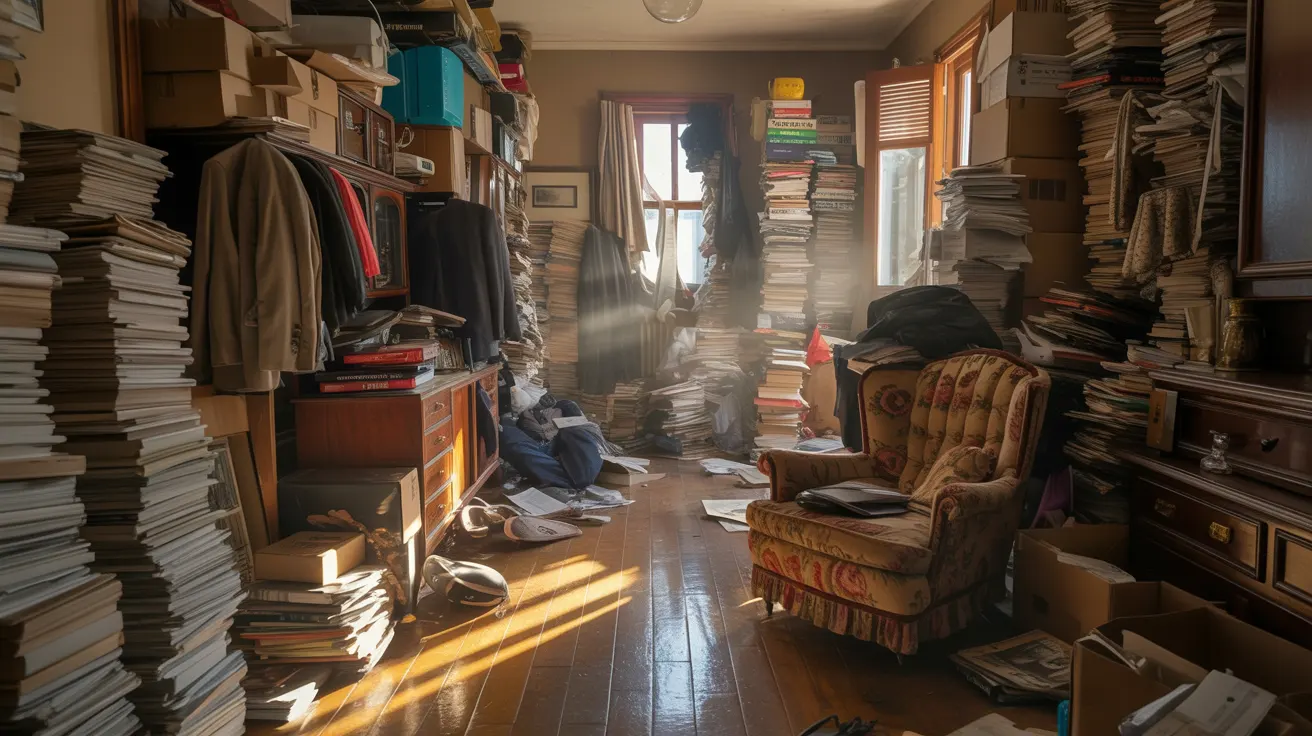
Hoarding disorder affects an estimated 2-6% of the population, but those numbers don’t capture the ripple effect on families, neighbors, and communities throughout Missouri and Illinois. This isn’t about being “messy” or “lazy”—hoarding disorder is a recognized mental health condition characterized by persistent difficulty discarding possessions, regardless of their actual value.
Key characteristics of hoarding disorder include:
- Severe anxiety when faced with discarding items
- Belief that items will be needed in the future
- Emotional attachment to objects others might see as worthless
- Living spaces that can no longer be used for their intended purpose
- Distress or impairment in social, occupational, or other areas of functioning
During our time filming with A&E’s “Hoarders,” we witnessed firsthand how this condition affects entire families. The person with hoarding disorder isn’t choosing to live this way, they’re often trapped by anxiety, depression, trauma, or other underlying issues that make letting go feel impossible.
What hoarding disorder is NOT:
- Laziness or poor housekeeping skills
- A choice to live in clutter
- Something that can be “fixed” by just cleaning everything out
- A reflection of someone’s intelligence or worth as a person
From Columbia’s historic neighborhoods to rural properties around Jefferson City, from St. Louis apartments to sprawling farms in Illinois, we’ve learned that hoarding disorder crosses all boundaries of age, income, education, and geography.

Scenario 1: Supporting a Living Loved One with Hoarding Disorder
When your family member is still living in a hoarding situation, your approach can make the difference between progress and permanent damage to your relationship. After two decades of working with families in crisis, we’ve seen what works and what absolutely doesn’t.
What TO Do: The Compassionate Approach
Start with understanding, not judgment. Your loved one already feels shame about their living situation. Adding guilt, frustration, or ultimatums usually makes people with hoarding disorder retreat further into isolation.
Listen before you act. Ask questions like: “How are you feeling about your living space?” or “What would make you feel most comfortable?” rather than “When are you going to clean this up?”
Educate yourself about the condition. Hoarding disorder often co-occurs with depression, anxiety, ADHD, or trauma. Understanding these connections helps you respond with empathy instead of exasperation.
Focus on safety first. If there are blocked exits, fire hazards, structural concerns, or health risks, these become immediate priorities that most people with hoarding disorder can understand and agree to address.
Offer specific help. Instead of “Let me know if you need anything,” try “I could help you clear a path to the back door this Saturday. Would that be helpful?”
Connect them with professional support. Therapists who specialize in hoarding disorder, support groups, and professional organizers trained in this area can provide ongoing help that families can’t provide alone.
What NOT to Do: Avoiding Common Mistakes
Never clean out their space without permission. We’ve seen well-meaning family members hire cleanup crews as “surprises,” thinking they’re helping. This almost always backfires, increasing anxiety and destroying trust.
Don’t threaten ultimatums unless you’re prepared to follow through. Empty threats about cutting off contact or involving authorities damage relationships without creating positive change.
Avoid focusing on the monetary value of discarded items. Comments like “Do you know how much money you’re wasting?” increase shame without addressing the underlying issues.
Don’t set unrealistic timelines. Hoarding recovery is measured in months and years, not days or weeks. Pressure to “hurry up” often causes people to shut down completely.
Never throw things away behind their back. Even items that seem obviously worthless may have deep emotional significance. Breaking this trust can permanently damage your relationship.
When Professional Hoarding Disorder Intervention Becomes Necessary
Sometimes, family support isn’t enough, and professional intervention becomes essential for the safety and well-being of everyone involved. Here are the situations where we recommend calling for professional hoarding cleanup help:
Immediate safety concerns in Columbia, St. Louis, or anywhere in our service area:
- Blocked exits that prevent escape during emergencies
- Structural damage from the weight of accumulated items
- Fire hazards from overloaded electrical systems or blocked heating vents
- Pest infestations that create health risks
- Plumbing problems causing unsanitary conditions
Health and wellness issues:
- Your loved one can no longer access essential areas like bathrooms or kitchens
- Medical equipment can’t be used safely
- Home healthcare workers refuse to enter the property
- Neighbors or authorities have expressed concerns
Legal or housing threats:
- Landlords threatening eviction
- Code enforcement violations
- Insurance companies threatening policy cancellation
- Adult Protective Services involvement
When these situations arise, professional hoarding cleanup services become essential. We’ve worked with families from rural Missouri farms to high-rise apartments in downtown St. Louis, and we understand that every situation requires a customized approach.
Scenario 2: Dealing with Inherited Hoarding Situations
Perhaps one of the most emotionally challenging situations families face is inheriting a property affected by a hoarding disorder. Whether it’s a family home in Columbia where your parents lived for decades, a lake house at Lake of the Ozarks that became overwhelming to maintain, or a property in Illinois that’s been in the family for generations, inherited hoarding situations require a completely different approach.
The Emotional Reality of Inherited Hoarding Properties
When you inherit a hoarding situation, you’re dealing with grief, family dynamics, time pressure, and often financial stress all at once. You might be facing:
Overwhelming scope. Walking into a lifetime’s accumulation can feel paralyzing. We’ve cleared homes where family members hadn’t been inside for years because the situation felt too big to address.
Guilt and family conflict. Siblings may disagree about what to keep, what to donate, and how quickly to proceed. Some family members want to save everything out of respect for the deceased, while others want to clear everything quickly to end the stress.
Time pressure. Estate settlements, property sales, or rental agreements often create artificial deadlines that add stress to an already emotional process.
Hidden treasures and important documents. Important papers, valuable items, and family heirlooms may be scattered throughout accumulated possessions, making it impossible to simply “throw everything away.”
Neighborhood concerns. Especially in close-knit communities around Lake of the Ozarks or Columbia neighborhoods, family members may feel embarrassed about the property’s condition and worry about judgment from neighbors.
Our Inherited Hoarding Property Process
After handling hundreds of inherited hoarding situations across Missouri and Illinois, we’ve developed a systematic approach that honors both the deceased and the family’s needs:
Initial assessment and family meeting. We meet with all stakeholders to understand family dynamics, identify essential items to save, and establish realistic timelines. This might happen at our Columbia office, or we can meet you at the property anywhere from St. Louis to rural Illinois.
Room-by-room documentation. Before removing anything, we photograph each area and create inventory lists. This helps family members feel confident that nothing important will be overlooked.
Systematic sorting process. We work methodically through each room, separating items into categories: family keepsakes, donations, recycling, and disposal. Family members can be as involved or hands-off as they prefer.
Safe and respectful handling. We treat inherited possessions with the same care we’d want for our own family’s belongings. Every item is evaluated for potential significance before disposal.
Documentation for tax purposes. For donated items, we provide detailed receipts that can be used for tax deductions, which can offset some estate settlement costs.
Complete property restoration. After removal, we handle final cleaning so the property is ready for sale, rental, or family use.
The A&E “Hoarders” Experience: What Television Doesn’t Show
Our experience on A&E’s “Hoarders” taught us invaluable lessons about working with families during their most vulnerable moments. You can see our work on the episode featuring Terri at this link, which showcases how we approach these sensitive situations.
What the show captures well:
- The genuine emotion and stress families experience
- The overwhelming scope of advanced hoarding situations
- The importance of professional therapeutic support alongside the cleanup
- The relief and hope that come with successful intervention
What happens off-camera:
- Extensive planning and preparation before filming begins
- Multiple conversations with family members to understand their specific needs
- Careful coordination with therapists and other professionals
- Follow-up support that continues long after the cameras stop rolling
The most important lesson from our television experience? Every person deserves dignity and respect, regardless of their living situation. The families we work with aren’t television subjects; they’re our neighbors from Columbia, St. Louis, Alton, and communities throughout Missouri and Illinois who deserve compassionate, professional help.

Understanding the Logistics: How Professional Hoarding Disorder Cleanup Actually Works
Many families hesitate to call for professional help because they don’t understand what the process involves. Here’s exactly how we handle hoarding cleanup situations across our service areas:
Planning and Preparation Phase
- Initial consultation (usually by phone or in-person): We discuss the scope of the situation, family concerns, timeline requirements, and any special considerations. Whether you’re dealing with a situation in downtown Columbia or a rural property outside Jefferson City, we adapt our approach to your specific circumstances.
- Property assessment: For larger projects, we visit the property to evaluate access challenges, safety concerns, and crew requirements. Urban properties in St. Louis might need special parking arrangements or elevator scheduling, while rural properties around Alton, Illinois might require different equipment or access strategies.
- Family meeting and planning: We work with all involved family members to establish priorities, identify items that must be preserved, and create a realistic timeline that respects both emotional needs and practical constraints.
Execution Phase
- Safety preparation: Before beginning work, we ensure proper protective equipment, adequate ventilation, and clear exit routes. Our crews are trained to recognize and handle hazardous materials, pest situations, and structural concerns.
- Systematic room-by-room approach: We typically start with the most critical areas (exits, bathrooms, kitchens) and work methodically through the property. Family members can be present and involved, or they can give us keys and let us handle everything—whatever feels most comfortable for them.
- Careful sorting and evaluation: Every item is evaluated for potential significance. We’ve found family photos in boxes of papers, important documents in kitchen drawers, and valuable items mixed in with everyday clutter. Our experience helps us recognize what might be important even when families can’t be present to guide the process.
- Real-time communication: We provide updates throughout the process, including photos of items we’re unsure about and questions about disposal preferences. This keeps families informed without overwhelming them with constant decisions.
Completion and Follow-up
- Final cleaning and restoration: After all items are removed, we handle final cleaning to leave the property in move-in condition. This includes carpet cleaning, sanitization, and minor repairs when possible.
- Documentation and receipts: We provide detailed documentation of donated items for tax purposes, disposal receipts for property records, and before/after photos that show the transformation.
- Resources and referrals: For ongoing support, we can recommend local therapists specializing in hoarding disorder, professional organizers, and support groups throughout Missouri and Illinois.
Local Challenges We Handle: From City to Rural
Our experience across Missouri and Illinois has taught us that hoarding situations present different challenges depending on location and property type:
Urban Challenges (St. Louis, Columbia, Alton)
- Apartment and condo buildings: Coordinating with building management, scheduling elevator time, managing noise concerns for neighbors, and navigating tight hallways and stairwells.
- Parking and access: Urban properties often require special permits for parking our trucks, coordination with building security, and careful timing to avoid disrupting business districts or residential areas.
- Neighbor proximity: In close-quarters urban living, privacy and discretion become especially important. We work carefully to minimize visible disruption and maintain confidentiality.
Suburban Challenges (Columbia neighborhoods, St. Charles, Lake area communities)
- HOA considerations: Homeowner associations may have specific requirements about truck placement, working hours, or temporary dumpster placement that we coordinate in advance.
- Larger properties: Suburban homes often have basements, attics, garages, and multiple outbuildings that require systematic planning to address efficiently.
- Family coordination: Suburban families often involve multiple family members in decision-making, necessitating more extensive coordination and communication throughout the process.
Rural Challenges (Lake of the Ozarks area, rural Illinois, outlying Missouri counties)
- Access and transportation: Rural properties may have challenging driveways, limited truck access, or seasonal accessibility issues that require special planning.
- Disposal logistics: Rural areas may be farther from recycling centers and donation facilities, requiring additional coordination to ensure responsible disposal.
- Utility concerns: Rural properties sometimes have well water, septic systems, or limited electrical service that create additional safety considerations during cleanup.
- Weather and seasonal factors: Rural cleanouts may be affected by seasonal road conditions, especially around Lake of the Ozarks, where properties may be more isolated during winter months.
The Mental Health Connection: Why Hoarding Disorder Requires Specialized Understanding
Through our work with A&E and thousands of families across Missouri and Illinois, we’ve learned that successful hoarding cleanup requires understanding the psychological aspects of the condition, not just the physical clearing process.
Common Co-occurring Conditions
- Depression and anxiety: Many people with hoarding disorder also struggle with depression or anxiety disorders that make decision-making and discarding extremely difficult.
- ADHD: Attention-deficit hyperactivity disorder can contribute to difficulty organizing, prioritizing, and following through with decluttering efforts.
- Trauma history: Many hoarding situations develop following significant losses, traumatic events, or major life changes. Accumulated possessions may represent a sense of security or control during uncertain times.
- Social isolation: Shame about living conditions often leads to increased isolation, which can worsen hoarding behaviors and make intervention more challenging.
Why Professional Hoarding Cleanup Helps
- Removes judgment and shame: Professional crews approach hoarding situations without personal emotional investment, reducing the shame and anxiety that family members might inadvertently trigger.
- Provides structure and momentum: The systematic, professional approach creates forward progress that can break through the paralysis many people with hoarding disorder experience.
- Handles overwhelming decisions: Professional crews can manage the hundreds of small decisions required during cleanup, reducing the cognitive burden on individuals with hoarding disorder.
- Creates immediate safety improvements: Professional services can quickly address safety hazards while working toward longer-term goals.
- Connects families with resources: Experienced professional services can recommend ongoing support, therapy, and maintenance strategies that help prevent future accumulation.
Creating a Safety Plan: Priority Areas and Emergency Situations
Whether you’re supporting a living loved one or managing an inherited situation, certain safety concerns require immediate attention regardless of the underlying emotional issues:
Immediate Safety Priorities
- Clear exit routes: Every home needs at least two accessible exits in case of fire or medical emergency. This is non-negotiable and usually the first priority in any hoarding cleanup.
- Bathroom and kitchen access: Basic hygiene and nutrition require functional bathroom and kitchen facilities. These areas often require immediate attention due to health concerns.
- Heating and cooling systems: Blocked vents, overloaded electrical circuits, and obstructed HVAC systems create fire hazards and health risks, especially during Missouri and Illinois weather extremes.
- Structural integrity: Excessive weight from accumulated items can damage floors, walls, and foundational elements, creating dangerous living conditions.
- Pest and sanitation issues: Food debris, moisture problems, and accumulated organic materials can attract pests and create unsanitary conditions that require immediate professional attention.
Working with Local Authorities
Sometimes hoarding situations involve local code enforcement, fire departments, or adult protective services. We’ve worked with authorities throughout Missouri and Illinois to help families address compliance issues while maintaining dignity and family relationships.
- Code enforcement cooperation: We work with local inspectors to understand specific requirements and create realistic timelines that satisfy legal obligations while respecting family needs.
- Fire department coordination: Fire marshals are primarily concerned with safe exit routes and fire hazards. We prioritize these areas to ensure compliance with safety requirements.
- Adult protective services: When vulnerable adults are involved, we coordinate with social services to ensure interventions support rather than disrupt ongoing case management.
The Recovery Process: What Success Looks Like
Recovery from hoarding disorder is rarely a straight line, and success looks different for every family. Through our experience across Missouri and Illinois, we’ve learned to recognize and celebrate different types of progress:
For Living Situations
- Safety improvements: Clear exits, functional utilities, and accessible essential areas represent significant victories, even if other areas still require attention.
- Increased social connection: When family members can visit again, or when home healthcare workers can safely provide services, these social improvements often matter more than perfect organization.
- Maintained progress: Some families need ongoing support to maintain improvements. This isn’t failure, it’s realistic management of a chronic condition.
- Personal empowerment: When individuals with hoarding disorder begin making independent decisions about possessions and living space, it represents significant psychological progress.
For Inherited Situations
- Family healing: Successfully handling an inherited hoarding situation can help families process grief, resolve conflicts, and preserve important memories as they move forward.
- Property restoration: Transforming an inherited property into a usable space, whether for sale, rental, or family use, provides practical resolution and financial relief.
- Preserved family history: Carefully sorting through accumulated possessions often reveals family treasures, important documents, and meaningful items that would have been lost in a less systematic approach.
- Community restoration: Addressing inherited hoarding properties often improves entire neighborhoods and removes stress from community relationships.
Getting Started: Your Next Steps
If you’re reading this because your family is dealing with hoarding disorder—whether supporting a loved one or managing an inherited situation—you’ve already taken the hardest step by seeking information and resources.
Immediate Actions You Can Take
Educate yourself about hoarding disorder through reputable sources like the International OCD Foundation or the Children of Hoarders organization.
Connect with professional support including therapists who specialize in hoarding disorder and support groups in Missouri and Illinois.
Address immediate safety concerns like blocked exits or fire hazards, which most people with hoarding disorder can understand as necessary priorities.
Start small and focus on safety rather than trying to address the entire situation at once.
When to Call Professional Hoarding Services
- Safety concerns require immediate attention: If exits are blocked, utilities are compromised, or health hazards exist, professional intervention becomes essential.
- Family relationships are suffering: When hoarding cleanup attempts are damaging family relationships, professional mediation can help preserve connections while making progress.
- The scope feels overwhelming: Properties with multiple rooms of accumulated items, structural concerns, or complex family dynamics often benefit from professional coordination.
- Time pressure exists: Legal deadlines, property sales, or other external pressures often require professional efficiency to meet necessary timelines.
- Previous attempts haven’t worked: If family efforts haven’t created lasting change, professional intervention may provide the structure and momentum needed for success.

How MrJunk® Approaches Hoarding Disorder Cleanup
Our 20+ years of experience, combined with our A&E “Hoarders” background, has taught us that successful hoarding cleanup requires more than just muscle and trucks. It requires understanding, patience, and a systematic approach that respects both the complexity of hoarding disorder and the needs of families in crisis.
Our Hoarding Disorder Specialization
Trained, compassionate crews: Every team member receives specific training in hoarding cleanup protocols, safety procedures, and respectful communication with families affected by hoarding disorder.
Flexible, family-centered approach: We work at your family’s pace, whether that means involving everyone in sorting decisions or handling everything while family members focus on other priorities.
Comprehensive safety protocols: From protective equipment to hazardous material handling, we prioritize crew and family safety throughout the process.
Systematic documentation: We photograph areas before and after, create inventory lists for important items, and provide detailed receipts for donations and disposal.
Local expertise across Missouri and Illinois: Whether you’re dealing with a situation in Columbia, MO, around Lake of the Ozarks, in St. Louis, or in Alton, Illinois, we understand local resources, disposal options, and community dynamics.
Ongoing support and resources: We connect families with local therapists, support groups, and other resources that help maintain progress after the initial cleanup.
Why Families Choose MrJunk® for Hoarding Situations
- Proven experience with complex situations: Our A&E “Hoarders” experience represents thousands of hours working with families during their most challenging moments.
- Family-owned understanding: As a family business, we understand the dynamics, emotions, and relationships involved in family crisis situations.
- Complete service coordination: From initial planning through final cleaning, we handle every aspect of the process, allowing families to focus on healing and moving forward.
- Respectful, dignified approach: We treat every person and property with the same respect we’d want for our own family members.
- Local accountability: We live and work in the communities we serve, which means our reputation depends on treating every family with care and professionalism.
Ready to Take the Next Step?
Dealing with hoarding disorder, whether supporting a loved one or managing an inherited situation, requires courage, patience, and often professional help. You don’t have to figure this out alone, and you don’t have to handle it all at once.
Frequently Asked Questions About Hoarding Disorder Cleanup
How much does professional hoarding cleanup cost, and do you provide estimates upfront?
Hoarding cleanup costs vary significantly based on the property size, level of accumulation, safety concerns, and family preferences for sorting versus disposal. Unlike companies that surprise you with hidden fees, we provide completely transparent, upfront pricing after assessing your specific situation.
Most residential hoarding cleanups in Columbia, St. Louis, or our other service areas range from moderate single-room projects to extensive whole-house situations. Factors affecting pricing include the number of crew members needed, disposal and donation costs, safety equipment requirements, and time investment for careful sorting.
We offer free, no-obligation estimates where we visit your property, discuss your family’s specific needs, and provide a detailed quote that won’t change once work begins. Many families are surprised to learn that professional cleanup often costs less than they expected, especially when you factor in the time, physical strain, and disposal logistics of handling it yourself.
For inherited properties, we can often work within estate timelines and provide the necessary documentation for insurance or legal purposes. Call us at (573) 886-JUNK for Columbia/Central Missouri or (314) 673-JUNK for St. Louis/Illinois areas to discuss your specific situation.
Can you work with someone who has a hoarding disorder without them being present, and how do you handle personal items?
Yes, we regularly work on properties where the person with a hoarding disorder prefers not to be present during the cleanup process. Some people find watching the process too emotionally overwhelming, while others feel more comfortable letting professionals handle the logistics while they focus on therapeutic support.
We treat every personal item with the same respect we’d want for our own family’s belongings. Even items that appear worthless might have deep emotional meaning, so we err on the side of caution and preserve anything that could be important. Family members can review photos and make decisions remotely, or they can designate specific items or categories they definitely want preserved.
Our A&E “Hoarders” experience taught us that trust is everything in these situations. Families who give us keys to handle everything independently do so because they know we’ll protect what matters while removing what’s truly junk. That responsibility isn’t something we take lightly.
How long does a hoarding cleanup typically take, and can it be done in phases?
Most hoarding cleanups take 1-2 days maximum, regardless of size or complexity. We’ve streamlined our process over 20 years to work efficiently while still maintaining our careful and respectful approach to sorting and preservation.
Single-room situations often wrap up in one day, while extensive whole-house projects typically require two full days with our experienced crews. We bring the necessary team members and equipment to complete projects within this timeframe because we understand that families need closure and resolution, not drawn-out processes that extend emotional stress.
For living situations where the person with a hoarding disorder is still in the home, we can phase the work over a 1-2 day period, starting with safety priorities, such as clearing exits and restoring bathroom/kitchen access on day one, and then addressing the remaining areas on day two. This allows families to see immediate progress as they adjust to the changes.
For inherited properties, most families prefer completing everything within our standard 1-2 day timeline to meet estate deadlines or property sale requirements. We coordinate scheduling to work within your specific timeframe needs.
Weather can impact rural properties around the Lake of the Ozarks or outlying areas, and urban logistics in St. Louis or Columbia may require scheduling around building restrictions. However, we plan for all these factors in our timeline estimates, so you know exactly what to expect.
The key is our systematic approach and experienced crews that can work efficiently without sacrificing the careful attention these situations require. We complete tasks quickly so families can move forward with their lives.
Do you really donate items, or does everything just go to the landfill? How do you handle the environmental impact?
This is one of the most important questions families ask, and we’re completely transparent about our disposal process. We donate approximately 60-70% of usable items we remove, recycle another 15-20%, and only send truly unusable items to landfills as a last resort.
We maintain partnerships with local charities throughout Missouri and Illinois, including Salvation Army, Goodwill, local churches, and specialized organizations like women’s shelters and veterans’ services. Furniture, clothing, household items, books, and electronics in good condition all find new homes through these partnerships.
For recycling, we work with certified e-waste processors for electronics, metal recyclers for appliances and metal items, and construction debris recyclers when appropriate. Many items that families assume are “junk” actually have significant recycling value.
Items that can’t be donated or recycled, damaged furniture, expired food, contaminated materials, or items with safety concerns go to licensed disposal facilities. We provide documentation of our disposal methods for families who want records for estate purposes or personal peace of mind.
Our “Keeping Missouri and Illinois Cleaner and Greener” commitment isn’t just a slogan; it’s how we’ve operated since 2005. We can provide detailed reports of where your items went if that information is important to your family’s decision-making process.
What safety precautions do you take, and what if you discover hazardous materials or structural damage?
Safety is our absolute top priority for both our crews and your family. Our teams come equipped with full protective gear, including respirators, gloves, eye protection, and protective clothing. We assess every property for potential hazards before beginning work and adjust our safety protocols accordingly.
Common safety concerns in hoarding situations include pest infestations, mold growth, unstable stacked items, blocked exits, electrical hazards, and compromised air quality. Our crews are trained to recognize and safely handle these conditions, and we have protocols for everything from asbestos concerns to biohazard situations.
If we discover hazardous materials, paint, chemicals, asbestos, or medical waste, we stop work in affected areas and coordinate with appropriate specialists. We’re licensed for standard junk removal, but we refer hazardous material situations to certified specialists for everyone’s safety.
Structural damage like compromised floors, damaged walls, or foundational issues is immediately reported to property owners. We can continue working in unaffected areas while you arrange for structural evaluations or repairs.
Our experience includes everything from minor pest issues to serious structural concerns, and we’ve developed relationships with contractors, exterminators, and specialists throughout our service areas who can address problems we’re not equipped to handle. We’ll never proceed if conditions aren’t safe for our crews or your family.
How do you help families deal with the emotional aspects of hoarding cleanup, especially family conflicts or guilt?
The emotional component of hoarding cleanup is often more challenging than the physical work, and our 20+ years of experience have taught us that successful cleanouts require addressing both aspects. While we’re not therapists, our experience with “Hoarders” on A&E taught us how to work sensitively with families during crisis situations.
Family conflicts are extremely common, including siblings disagreeing about what to keep, adult children feeling frustrated with their parents, or spouses having different tolerance levels for accumulating possessions. We often serve as neutral mediators who can help families focus on shared goals, such as safety and health, rather than getting stuck in old patterns of blame or frustration.
For guilt and shame, we emphasize that hoarding disorder is a medical condition, not a character flaw. Families often feel guilty about “giving up” on their loved one or ashamed about asking for help. We remind them that seeking professional support shows love and concern, not failure.
When families disagree about disposal decisions, we can preserve questionable items for later review, take photos for remote decision-making, or work with family members separately to reduce conflict. Sometimes, the best approach is for family members to focus on therapeutic support and emotional processing while handling logistics.
We also connect families with local resources, including therapists who specialize in hoarding disorder, support groups for family members, and ongoing organizational support. The cleanup is often just the beginning of the recovery process, and families need long-term resources to achieve success.
Most importantly, we remind families that progress matters more than perfection. Even small improvements in safety and livability represent major victories worth celebrating.
Call us today to talk through your specific situation:
- Columbia & Central Missouri: (573) 886-JUNK (5865)
- Lake Ozark & Jefferson City: (573) 886-JUNK (5865)
- St. Louis, St. Charles & Alton, IL: (314) 673-JUNK (5865)
Text us for immediate response: Same numbers work for texting. Sometimes, it’s easier to send a message than make a phone call when you’re feeling overwhelmed. Complete our online junk request form if you prefer to start the conversation in writing.
When you contact us, you’ll speak directly with one of our area owners, Dax, Chris, or Trevor, who will listen to your situation, answer your questions, and help you create a realistic plan that works for your family’s specific needs.
No judgment. No pressure. Just honest, experienced guidance from people who’ve helped hundreds of families navigate these challenging situations successfully.
Remember: Asking for help isn’t giving up, it’s taking the first step toward getting your family’s life back. Whether you’re in Columbia, around Lake of the Ozarks, in St. Louis, or anywhere in between, we’re here to help you through this process with dignity, respect, and professional expertise.