
Best Commercial Items Removal in Missouri & Illinois | MrJunk® Will Haul It All
Family-owned local crews hauling commercial items from MO & IL businesses since 2005

Why Missouri & Illinois Businesses Choose MrJunk® for Commercial Item Removal
Last month, we removed 23 office chairs from a single conference room. Apparently, the company had been buying new chairs every time someone complained about the old ones, but nobody ever threw the old ones away. They just kept stacking them in the corner like some kind of ergonomic Jenga tower.
The week before that?
Forty-seven shopping carts from a grocery store that had been “temporarily” storing them in their back warehouse. For three years.
Welcome to commercial junk reality.
Here’s the thing about business junk—it multiplies faster than your email inbox and usually weighs about as much as your annual budget meetings feel.
From St. Louis office buildings where filing cabinets have achieved sentient status, to Illinois retail stores where mannequins are plotting their escape, to industrial facilities in Missouri where equipment goes to die (but refuses to leave quietly), we’ve seen it all.
Since 2005, MrJunk® has been hauling away the stuff that businesses accumulate faster than they can explain in board meetings. Whether you’re dealing with office furniture that’s older than your newest employees, retail fixtures that survived three store redesigns, or industrial equipment that came with the building lease, we’re the team that makes it disappear.
And here’s what makes this page different from all those other junk removal websites that sound like they were written by robots: we’re actually going to tell you what we take.
Not why you might need us (you already know that), not how amazing we are (the reviews speak for themselves), but the actual stuff we haul away from commercial properties across Missouri and Illinois.
Three main categories of commercial junk dominate our trucks:
- Office Items (from cubicles to copiers to those mysterious server boxes)
- Retail Items (displays, equipment, and whatever’s left after “everything must go”)
- Industrial Items (the heavy stuff that requires both brains and brawn)
Our three area owners—Trevor covering Illinois and the St. Louis metro, Dax handling Columbia and central Missouri, and Chris managing the Lake region—have probably hauled away items you didn’t even know had names. They’ve definitely got stories about the weird stuff they’ve found in supposedly “empty” commercial spaces.
So whether you’re an office manager staring at a supply closet that’s achieved its own zip code, a retail manager dealing with the aftermath of a store renovation, or a facility director who inherited equipment that predates the internet, this page will help you figure out if we can take it.
Spoiler alert: We probably can.
Office Items MrJunk® Takes (When Your Workspace Needs an Intervention)
Office junk is like that coworker who never quite leaves—it just keeps accumulating in corners, supply rooms, and storage areas until someone finally admits it’s a problem. We’ve cleared out offices where the printer graveyard had more residents than the actual employee parking lot.
The thing about office cleanouts is that they’re rarely just about getting rid of old stuff. They’re about making space for new stuff, dealing with technology that became obsolete faster than a software update, and handling furniture that seemed like a great idea during the Clinton administration.
Here’s what we regularly haul away from Missouri and Illinois office buildings:
Cubicle Workstations and Modular Office Furniture
Remember when cubicles were going to revolutionize the workplace? Now they’re mostly revolutionizing our truck space. We’ve removed entire cubicle farms from offices that decided open floor plans were the future, only to get called back six months later to help set up new cubicles because open floor plans drove everyone crazy.
Those modular office systems might have cost a fortune when they were installed, but they lose value faster than a new car. The good news? We know how to disassemble them without turning your office into a construction zone, and we can often donate the pieces to nonprofits or small businesses that are just getting started.
Furniture, Chairs & Conference Room Equipment
Office furniture has a longer lifespan than most business plans, which explains why we regularly remove conference tables that have hosted more awkward meetings than a high school reunion. Executive desks that were designed when fax machines were cutting-edge technology. Filing cabinets that contain documents from companies that don’t exist anymore.
And don’t get us started on office chairs. We’ve hauled away chairs with more adjustments than a NASA control panel, chairs that squeak like they’re auditioning for a horror movie, and chairs that lean so far to the left they could run for political office.
Network Servers and IT Equipment
This is where office cleanouts get interesting (and expensive-looking). We’ve removed server rooms that hummed like they were powering a small city, only to discover they were running email systems for twelve people. Computer equipment that required its own climate control. Network components that cost more than most people’s cars but became obsolete when cloud computing showed up to the party.
The key with IT equipment removal is security and proper disposal. We’re not just hauling away old computers—we’re handling equipment that might contain sensitive business information. Our teams understand the importance of secure data destruction and work with certified e-waste facilities to ensure everything is handled properly.
Filing and Storage Systems
Before everything went digital, businesses stored information the old-fashioned way: in filing cabinets that multiplied like rabbits and required their own postal codes. We’ve cleared out filing systems that contained decades of paperwork, most of which probably should have been shredded years ago.
Modern storage systems aren’t much better. Modular shelving units that were supposed to organize everything but ended up organizing nothing. Storage cabinets that became black holes for office supplies. Filing systems so complex they required a map and a prayer to navigate.
Printer and Copier Equipment
If there’s one thing office buildings accumulate faster than passive-aggressive emails, it’s broken printer equipment. We’ve removed printers the size of small cars, copiers that required their own zip codes, and all-in-one machines that did everything except the one thing they were supposed to do.
Commercial printing equipment removal requires some finesse—these machines are heavy, awkwardly shaped, and usually installed in spaces that seemed larger when they were empty. Plus, many contain toner and other materials that require special handling for environmental compliance.
What makes office item removal tricky: Security concerns, after-hours scheduling, tight spaces, expensive-looking equipment that’s actually worthless, and the fact that most office buildings have elevators designed by people who never had to move furniture.
What we bring to office cleanouts: Background-checked teams, flexible scheduling, proper equipment for tight spaces, understanding of e-waste requirements, and the patience to work around business operations without causing disruptions.
Retail Items We Take (When Your Store Needs a Fresh Start)
Retail spaces accumulate junk faster than clearance items disappear during Black Friday. We’ve cleaned out stores where the “temporary” displays had been there so long they qualified for historic preservation status, and retail storage rooms that contained inventory from companies that went out of business during the Bush administration. The first one.
Retail cleanouts are different from office cleanouts because retail spaces are designed to be constantly changing. That means they’re constantly generating items that need to go away—old displays, outdated equipment, inventory that didn’t sell, and fixtures that survived three different store concepts.
Here’s what we regularly remove from retail establishments across Missouri and Illinois:
Fixtures and Display Removal
Retail fixtures are like fashion trends—what seemed essential five years ago now looks dated enough to be embarrassing. We’ve removed display cases that showcased products nobody remembers, shelving units designed for merchandise that’s no longer legal to sell, and lighting fixtures that consumed more electricity than some small towns.
Store fixtures range from simple clothing racks to elaborate display systems that required engineering degrees to install. Some fixtures are modular and can be reconfigured for new uses. Others are so specifically designed for one type of merchandise that they’re about as useful as a screen door on a submarine.
The tricky part about fixture removal is that many retail spaces are still operating while we’re working. We’ve gotten pretty good at removing old displays while new ones are being installed, working around store hours, and handling the logistics of retail spaces that can’t afford to close for renovations.
Food Service and Kitchen Equipment Removal
Restaurant equipment removal is like playing Tetris with items that weigh as much as small cars and are shaped like they were designed by someone who hates moving companies. Commercial ovens, industrial refrigeration units, prep tables, dishwashing systems—we’ve removed kitchen equipment from fast-food joints to fine dining establishments.
Food service equipment presents unique challenges because much of it is permanently installed, requires disconnection of utilities, and weighs enough to crush small buildings. Plus, commercial kitchens are usually designed with efficiency in mind, not equipment removal accessibility.
We’ve hauled away fryers that cooked enough food to feed small armies, ice machines that produced more ice than Alaska, and walk-in coolers that were larger than most people’s bedrooms. The good news is that much of this equipment can be resold or donated to smaller restaurants, culinary schools, or nonprofit organizations.
POS Systems and Technology Equipment
Retail technology changes faster than teenage fashion trends, which explains why we regularly remove point-of-sale systems that were cutting-edge when they were installed but are now as obsolete as cassette players. Cash registers that required their own software updates, credit card processing equipment that predates chip readers, and security systems that recorded everything on VHS tapes.
Modern retail technology isn’t much different—it just becomes obsolete faster. Tablet-based POS systems, digital signage, inventory management hardware, and customer tracking equipment that seemed revolutionary until something newer came along six months later.
Product Disposal and Overstock Removal
Sometimes retail cleanouts include actual merchandise—products that didn’t sell, seasonal items that are permanently out of season, inventory from vendors that no longer exist, and overstock that’s been taking up valuable storage space for longer than anyone wants to admit.
Product disposal requires careful handling because some items can be donated, others can be recycled, and some need special disposal methods. We work with retailers to identify items that can find new homes through charitable organizations, products that can be properly recycled, and merchandise that needs to be disposed of according to manufacturer guidelines.
Shopping Carts and Small Equipment
Retail spaces accumulate small equipment like teenagers accumulate excuses for being late. Shopping carts that multiplied when nobody was watching, hand trucks that haven’t been used since the Clinton administration, and storage containers that contain other storage containers in an endless recursive loop.
We’ve removed shopping cart collections that rivaled grocery store inventories, cleaning equipment that was older than some employees, and storage systems that were so confusing they required archaeology degrees to understand.
Store Closures and Large Project Removal
Complete store closures are like retail archaeology projects—we discover merchandise from multiple eras, fixtures from different store concepts, and equipment that nobody remembers installing. Store closure cleanouts often involve tight timelines, lease requirements, and the need to coordinate with multiple contractors working simultaneously.
Large retail projects might involve removing everything from a single department or clearing entire store sections for renovation. These projects require careful planning, efficient execution, and the ability to work around ongoing store operations without disrupting customer experiences.
What makes retail item removal challenging: Tight timelines, ongoing operations, heavy equipment in tight spaces, varied item types requiring different disposal methods, and the fact that retail spaces are designed for shopping, not removal.
What we bring to retail cleanouts: Experience with retail logistics, flexible scheduling around store hours, proper equipment for heavy commercial items, understanding of product disposal requirements, and teams that work efficiently without disrupting customer experiences.
Industrial Items We Take (When Your Facility Needs Serious Muscle)
Industrial cleanouts are where junk removal gets serious. We’re talking about equipment that weighs more than most people’s houses, machinery that requires engineering degrees to understand, and items so specialized that nobody’s quite sure what they do but everyone agrees they need to go.
Industrial facilities accumulate items differently than offices or retail spaces. Instead of gradually collecting random stuff, they tend to accumulate specific types of equipment, materials, and machinery that becomes obsolete, broken, or unnecessary due to process changes, facility upgrades, or technological advances.
Here’s what we regularly haul away from industrial facilities across Missouri and Illinois:
Cardboard and Packaging Disposal
Industrial facilities generate cardboard faster than teenagers generate drama. We’ve removed cardboard mountains from warehouses, packaging material collections that achieved their own weather patterns, and shipping supplies that accumulated faster than anyone could use them.
The challenge with industrial cardboard removal isn’t just the volume—it’s the variety. Different cardboard types require different recycling processes, some packaging materials contain other materials that affect disposal methods, and large volumes require coordination with recycling facilities that can handle industrial quantities.
We work with industrial clients to establish regular pickup schedules for ongoing cardboard management, handle one-time cleanouts of accumulated packaging materials, and coordinate with recycling facilities to ensure maximum environmental responsibility.
Equipment and Machinery Removal
Industrial equipment removal is like playing chess with items that weigh several tons and require specialized knowledge to move safely. Manufacturing equipment that produced thousands of widgets, processing machinery that handled materials nobody remembers, and production lines that were designed when “automation” meant having electric motors.
Heavy machinery presents unique challenges because it’s often bolted down, connected to utilities, and designed to stay in place permanently. We’ve removed equipment that required crane operations, machinery that had to be disassembled on-site, and production lines that were longer than city blocks.
The key to successful industrial equipment removal is planning. We work with facility managers to understand utility disconnection requirements, coordinate with crane operators when necessary, and ensure that removal doesn’t interfere with ongoing operations in other parts of the facility.
Pallet and Shipping Material Removal
Industrial facilities collect pallets like libraries collect books—systematically, continuously, and in quantities that eventually require professional intervention. Wooden pallets, plastic shipping containers, metal storage racks, and shipping materials that accumulated during busy seasons and never got cleared out.
Pallet removal might seem straightforward until you’re dealing with hundreds of them stacked in configurations that defy physics. We’ve removed pallet collections that required architectural consultations, shipping materials that filled entire warehouse sections, and storage containers that contained other storage containers in endless recursive loops.
Storage Systems and Warehouse Racking
Industrial storage systems are designed to hold massive amounts of inventory, which means they’re built like small buildings and require similar planning to remove. Warehouse racking systems, mezzanine storage platforms, conveyor systems, and material handling equipment that seemed permanent until the facility layout changed.
Storage system removal often involves coordination with ongoing operations, careful disassembly to avoid damaging surrounding equipment, and handling of systems that are larger and heavier than they appear. We’ve removed racking systems that required engineering consultations and storage platforms that were essentially buildings within buildings.
Safety Equipment and Compliance Gear
Industrial facilities accumulate safety equipment faster than regulations change, which means they’re constantly dealing with outdated gear that’s no longer compliant, replacement equipment that made older items obsolete, and specialized safety systems that were designed for specific processes that no longer exist.
Safety equipment disposal requires understanding of regulatory requirements, proper handling of materials that might contain hazardous substances, and coordination with certified disposal facilities for items that can’t go to standard landfills.
Cleaning Equipment and Janitorial Supplies
Industrial cleaning equipment operates on a different scale than office cleaning supplies. We’re talking about floor scrubbers the size of small cars, industrial vacuum systems that could probably clean entire neighborhoods, and chemical storage systems that require hazmat certification to approach.
Industrial cleaning equipment removal involves understanding of chemical disposal requirements, proper handling of equipment that might contain cleaning residues, and coordination with facilities that can properly process industrial cleaning materials.
HVAC Components and Ventilation Systems
Industrial HVAC systems are basically small buildings disguised as equipment. We’ve removed ventilation systems that processed more air than some small towns, heating equipment that consumed more energy than residential neighborhoods, and cooling systems that were larger than most people’s garages.
HVAC component removal requires understanding of refrigerant handling requirements, coordination with certified technicians for proper disconnection, and handling of equipment that’s often installed in hard-to-reach locations designed for operation, not removal.
What makes industrial item removal challenging: Size and weight of equipment, specialized disposal requirements, ongoing operations that can’t be interrupted, safety considerations, regulatory compliance, and the fact that industrial facilities are designed for efficiency, not equipment removal.
What we bring to industrial cleanouts: Experience with heavy equipment, understanding of industrial safety requirements, coordination with specialized disposal facilities, proper equipment for large-scale removals, and teams trained in industrial environments.
What Happens After MrJunk® Loads Your Commercial Items
Here’s what sets us apart from companies that just haul stuff to the nearest dumpster: we actually care where your commercial items end up. Since 2005, we’ve been working to keep Missouri and Illinois cleaner and greener, which means we’ve developed relationships with recycling facilities, donation centers, and disposal sites throughout our service area.
Office equipment often gets a second life through donations to schools, nonprofits, and small businesses that are just getting started. That conference table you’re tired of looking at might become the boardroom centerpiece for a startup that can’t afford new furniture. Those filing cabinets could help a nonprofit organize their operations more efficiently.
Retail fixtures and equipment frequently find new homes with businesses that are expanding or upgrading their spaces. Restaurant equipment often gets refurbished and resold to smaller establishments. Display fixtures can be repurposed for different retail concepts or donated to organizations that need professional-looking displays.
Industrial materials like cardboard and packaging get sent to recycling facilities that can process large volumes efficiently. Metal equipment gets recycled through scrap processors. Machinery that’s still functional might find new life at facilities that can use older equipment for specific processes.
Electronic equipment from all categories gets processed through certified e-waste facilities that ensure proper data destruction and component recycling. We understand that business equipment might contain sensitive information, and we work with facilities that meet security requirements for commercial data destruction.
The point is, we don’t just make your stuff disappear—we make sure it goes somewhere appropriate. Whether that’s recycling, donation, resale, or proper disposal, we handle the logistics so you don’t have to research disposal requirements for every different type of item.
Questions People Actually Ask Us About Commercial Items Removal
Do you take everything from commercial properties?
Almost everything. We can’t take hazardous materials, but we can usually point you toward someone who can. The weird stuff? That’s our specialty. The normal stuff? We handle tons of it. The stuff you’re not sure about? Call us—we’ve probably seen it before.
Can you work around our business hours?
Absolutely. We’ve done office cleanouts at 2 AM, retail cleanouts during store renovations, and industrial cleanouts around production schedules. Trevor, Dax, and Chris have all mastered the art of efficient removal without disrupting ongoing operations.
What about sensitive business information on equipment?
We work with certified e-waste facilities that provide certificates of data destruction when required. Our teams understand confidentiality requirements and can provide documentation for compliance purposes. We’ve handled everything from law firm files to medical equipment with patient data.
How quickly can you respond for commercial cleanouts?
Often same-day throughout Missouri and Illinois. Emergency situations like lease expirations, sudden relocations, or equipment failures get priority scheduling. We understand that business timelines don’t always allow for weeks of planning.
Do you provide documentation for tax purposes?
Yes, we can provide receipts, disposal documentation, and donation letters when items are given to charitable organizations. Many businesses need this documentation for tax deductions or regulatory compliance.
Can you handle really large commercial projects?
We’ve cleared entire office buildings, complete retail stores, and major industrial facilities. Large projects get dedicated crew assignments and project management to ensure everything runs smoothly. No project is too big—we just bring more trucks.
What about items that might still have value?
We’ll help you identify items that could be sold rather than disposed of. Sometimes businesses don’t realize that their “old junk” has resale value. We’ve helped clients recover costs on equipment they thought was worthless.
Do you work with property management companies?
Definitely. Property managers are some of our best customers because they understand the value of reliable service. We can set up ongoing relationships for multiple properties, emergency response agreements, and regular maintenance cleanouts.
Ready For MrJunk® to Clear Out Your Commercial Space?
Whether you’re looking at an office supply closet that’s achieved its own gravitational pull, a retail storage room that’s hosting a convention of discontinued merchandise, or an industrial facility where equipment goes to multiply, we’re the team that makes commercial junk disappear.
Our three area owners—Trevor in Illinois and St. Louis, Dax in Columbia and central Missouri, and Chris in the Lake region—have probably handled situations exactly like yours. They’ve definitely got stories about the interesting stuff they’ve found in supposedly “empty” commercial spaces.
Not sure if we’ll take it? Call us. We probably have, and we probably have a story about it.
Free estimates throughout Missouri and Illinois. Licensed, insured, and we actually show up when we say we will. Available seven days a week because commercial junk doesn’t respect weekends, and neither do we.
Your commercial cleanout starts with a simple phone call:
Mid-Missouri: (573) 886-JUNK (5865) Illinois/St. Louis: (314) 673-JUNK (5865)
Free estimates • Licensed & insured • Available 7 days a week Same-day service often available • No hidden fees
Serving businesses throughout Missouri and Illinois since 2005 Family-owned • Locally operated • Commercially focused
When your business needs commercial junk removed right, you call MrJunk®.


5-Star Rated 1, 2, 3, Process (No Corporate Nonsense)
No hidden fees. No disposal charges. Just one simple price, and we take it all away. We do all the lifting, loading, and hauling so you don’t have to.




MrJunk® – Proven Results Across MO & IL
The numbers don’t lie. When Missouri and Illinois families need junk gone, they call us first, and they keep calling us back. Whether it’s a single broken appliance, hot tub removal, or a complete property transformation, we’ve built our reputation on doing exactly what we promise, when we promise it.

Average Customer Satisfaction Rating

Thousands of Happy Customers

Yelp, FB, Google, Nextdoor , Top Rated® & more…
Family-Owned Junk Removal Experts

Fast & Easy Junk Removal
We’re not just the oldest locally-owned junk removal company in Mid-Missouri, we’re the most trusted. Recommended by neighbors who’ve watched us transform their most overwhelming spaces into clean, organized environments they can’t wait to use again.

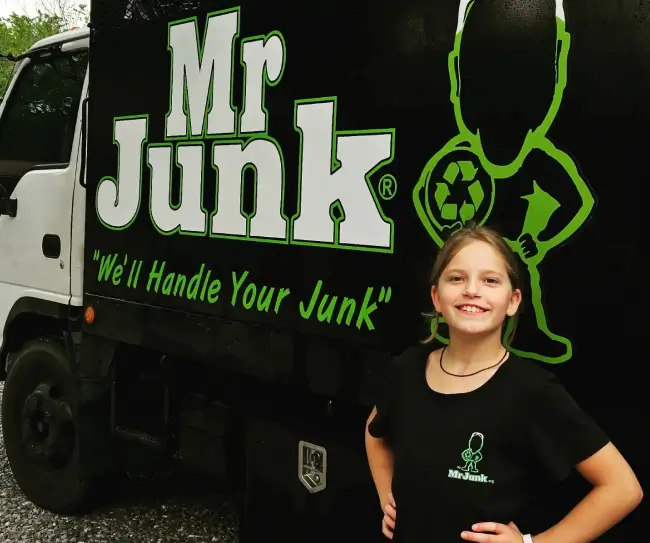
Licensed, Insured, & Locally Trusted
We’re the original MrJunk®, not a franchise, not some fly-by-night operation. Dax started this company in Columbia back in 2005, and we’ve been building our reputation one satisfied customer at a time ever since. When you call us, you’re getting the team that’s been perfecting junk removal across Missouri and Illinois for over two decades.
Keeping Missouri & Illinois Cleaner & Greener
We don’t just haul your stuff away and call it a day. After 20+ years in this business, we’ve built partnerships with local charities throughout Missouri and Illinois because we know that one person’s junk is often another family’s treasure. Here’s what actually happens to your stuff: We donate what we can to local organizations, recycle electronics and metals properly, and dispose of the rest responsibly at licensed facilities. Because keeping our communities clean isn’t just good business, it’s what we do!



We’re strong, but we’re not hazmat specialists. Items like lead paint, asbestos, medical waste, chemicals, and other hazardous materials need specialized disposal through certified facilities. We also skip anything with active pest infestations, live electrical connections still wired into your house, and materials that require special permits we don’t carry. But here’s the thing – if we can’t take it, we’ll point you toward the right disposal solution. Most communities have hazardous waste collection events, and we know the proper facilities to recommend.
MrJunk® Serves Over 100 Areas & Locations In Missouri & Illinois With Local Owners
We’ve been serving Missouri and Illinois since 2005, with local owners who actually live in the communities we serve. From Columbia where it all started, to Lake of the Ozarks, St. Louis, and across the river to Illinois – when you call us, you’re getting neighbors who know your area and can be there when you need us. Click on any location below to learn more about MrJunk® in your area and schedule your FREE junk removal estimate.
Look For Us Around Town
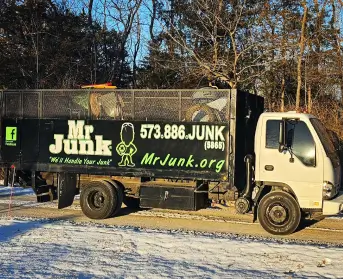
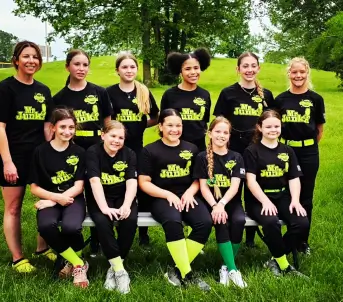
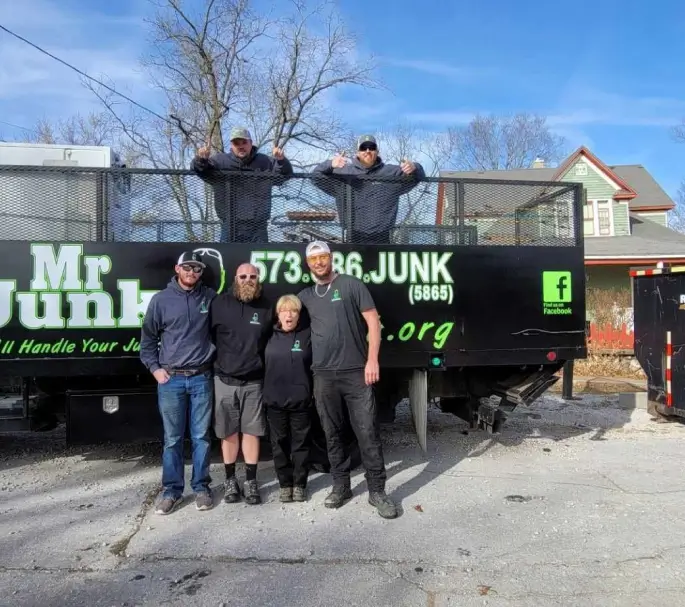
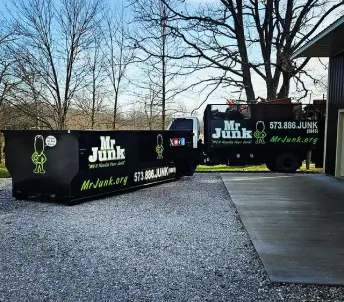
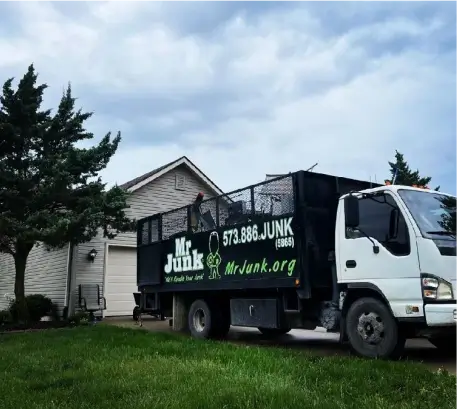
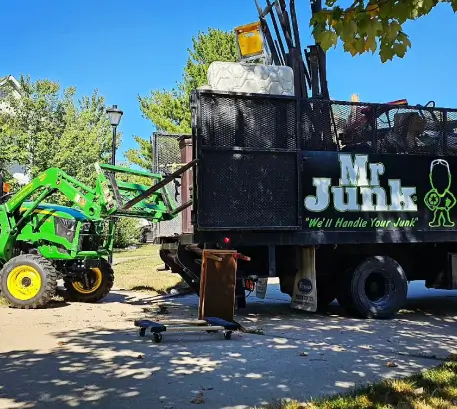
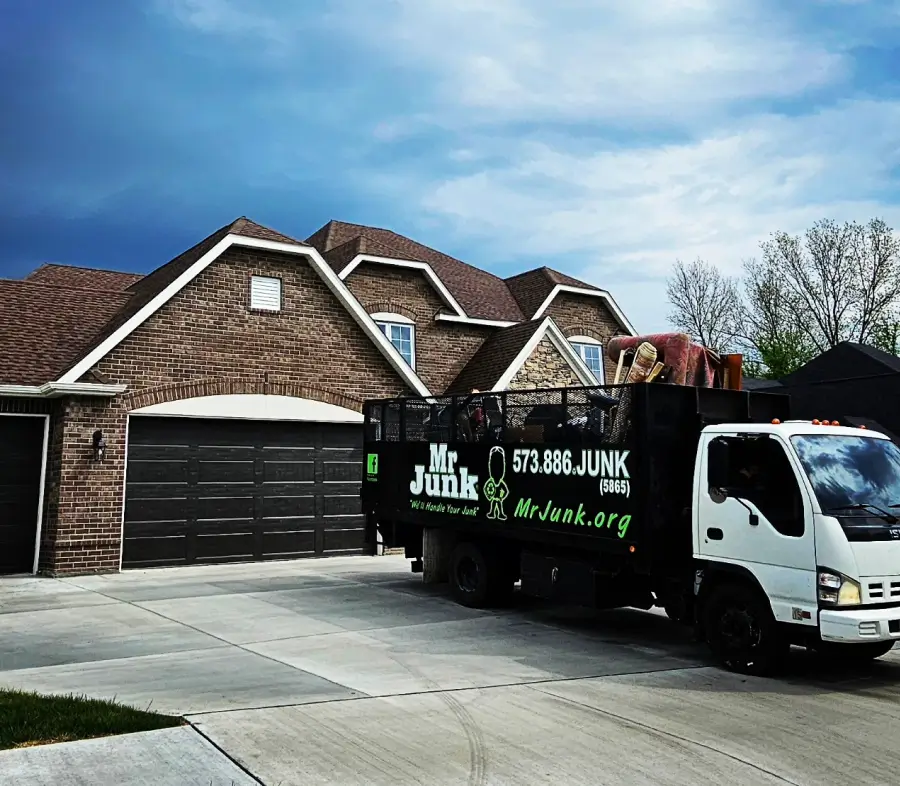
You’ll see our trucks all over Missouri and Illinois – we’re out there every day helping families and businesses get their spaces back. Wave if you see us, we’ll definitely wave back. After 20+ years in this business, we’ve learned that the best part isn’t just hauling junk away – it’s seeing people actually use their garages again, or finally have that basement they can walk through without playing Tetris. We’re local, we’re family-owned, and we genuinely enjoy helping our neighbors solve their junk problems. Ready to get your space back? Give us a call. MrJunk® will be there when you need us.


573-886-5865
Thinking About Bringing A MrJunk® To Your Area?
After 20+ years building MrJunk® from a single truck in Columbia to serving communities across Missouri and Illinois, we’ve learned what works. If you’re interested in bringing our proven approach to junk removal to your community, let’s talk.
We’re not a typical franchise operation with massive fees and corporate requirements. We’re looking for the right people who want to build something meaningful in their local area while being part of the MrJunk® family.
 Proven business model that’s been working since 2005.
- Marketing, training, and support from people who actually run trucks.
- The MrJunk® name and reputation you can build on with a protected area.
5-Star Service Every Single Time!

Latest news & articles from MrJunk®

The $50,000 Mistake Most Home Sellers Make (And How to Avoid It for Under $500)
Summary Cluttered homes consistently sell for $20,000-$50,000+ less than their…

Home Safety Hazards: Why Cluttered Spaces Are More Dangerous Than You Think
Summary Cluttered homes create serious safety hazards that many families…

The Complete Guide to Foreclosure Cleanouts in Missouri & Illinois: What Property Pros Need to Know
Summary Foreclosure cleanouts require specialized expertise beyond standard junk removal;…