
Home Safety Hazards: Why Cluttered Spaces Are More Dangerous Than You Think
Summary
Cluttered homes create serious safety hazards that many families don’t recognize until accidents happen. Falls are the #1 preventable risk, blocked exits turn emergencies into tragedies, and hidden electrical hazards cause fires that could destroy everything. This guide covers the real dangers emergency responders fear most, regional safety patterns across Missouri and Illinois, and why professional assessment often reveals hazards families have stopped noticing. You’ll learn how quickly professional clearing eliminates multiple safety threats simultaneously, from restoring emergency access to preventing falls that send people to hospitals.
The Safety Hazards Emergency Responders See (That Families Have Stopped Noticing)
Home safety hazards lurk in cluttered spaces across Missouri and Illinois, creating daily risks that many families don’t recognize until something goes wrong. After 20+ years of helping families reclaim their spaces, including being selected by A&E’s “Hoarders” for our expert care and communication during sensitive situations, we’ve seen how accumulated clutter transforms from inconvenience to genuine safety threat faster than most people realize.
What You’ll Learn About Home Safety Hazards:
- The hidden dangers in everyday clutter that emergency responders fear most
- Why falls are the #1 preventable safety risk in cluttered homes
- How blocked exits turn minor emergencies into life-threatening situations
- Fire safety risks that insurance companies and fire departments recognize immediately
- When professional safety assessment becomes essential, not optional
- How quickly professional clearing eliminates multiple safety hazards simultaneously
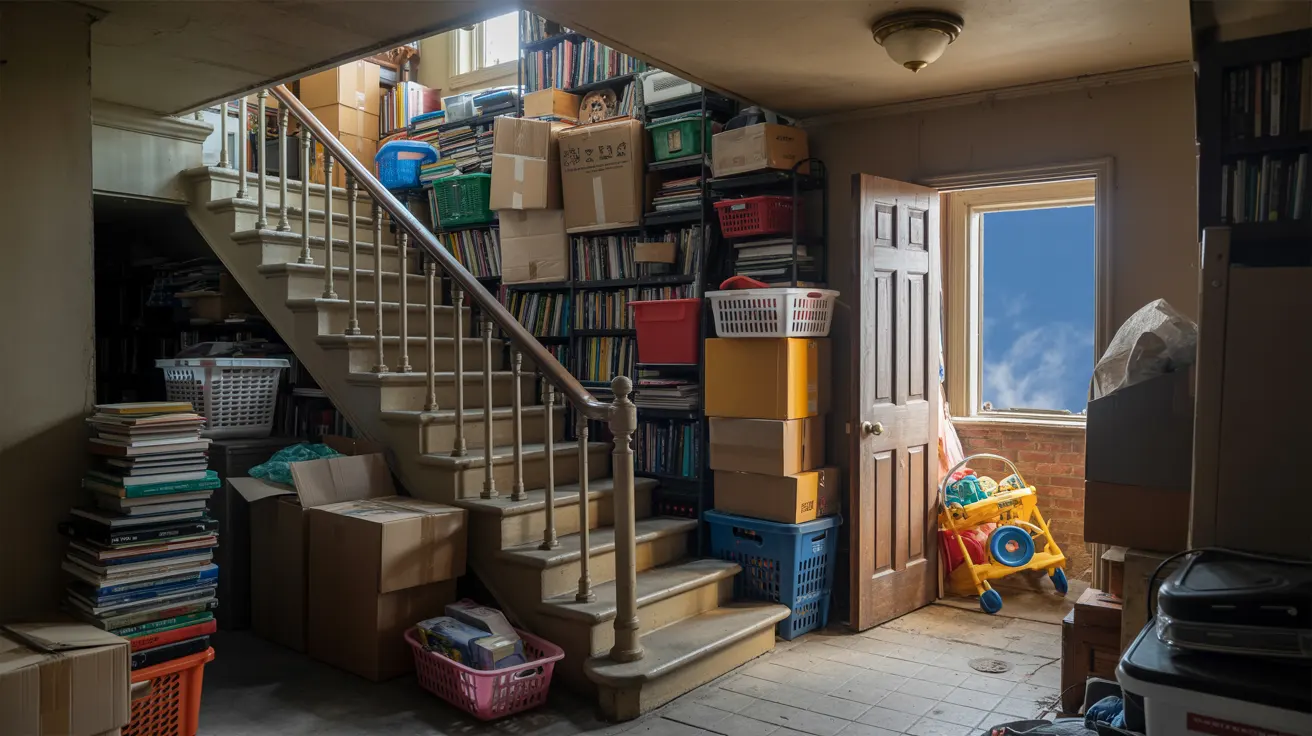
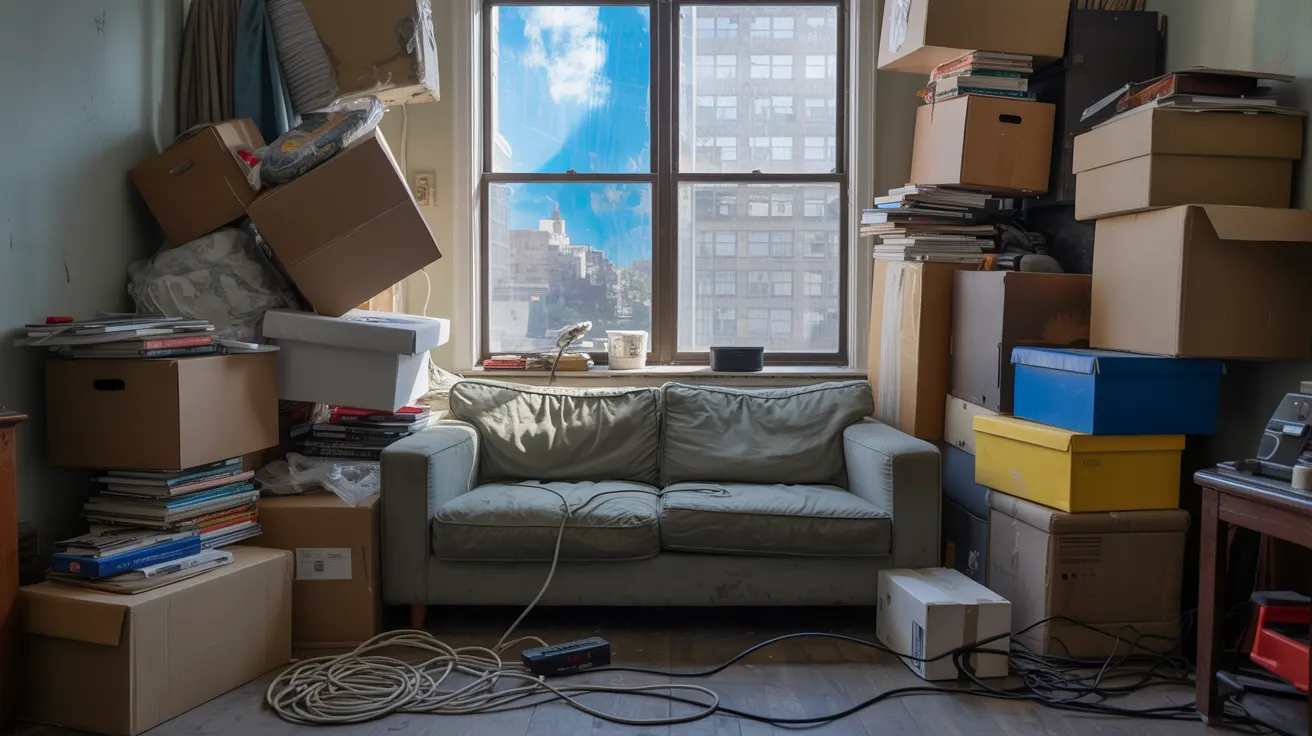
Here’s the reality: That pile of items blocking your hallway isn’t just an eyesore, it’s a trip hazard that could send you to the emergency room. Those boxes stacked against your back door aren’t just storage; they’re blocking your emergency exit. The overloaded power strip hidden behind accumulated items isn’t just a convenience; it’s a fire hazard that could cost you everything.
Whether you’re in Columbia, worried about aging parents navigating cluttered pathways, managing a cramped St. Louis apartment where every square foot matters, dealing with seasonal accumulation at your Lake of the Ozarks property, or concerned about rural Illinois family safety where emergency response times are longer, home safety hazards in cluttered spaces affect every type of property and every age of resident.
But here’s the good news: Most home safety hazards created by clutter can be eliminated quickly and affordably through professional assessment and clearing. You don’t have to live with daily risks while planning the “perfect” organizing project that never happens.
Understanding Home Safety Hazards: More Common and Serious Than Most People Realize
Home safety hazards in cluttered environments aren’t just theoretical concerns; they’re daily realities that affect thousands of families across Missouri and Illinois. Emergency responders, insurance adjusters, and safety professionals recognize cluttered homes as high-risk environments, and here’s why their concerns are entirely justified.
The Statistics That Should Worry Every Family
- Fall-related injuries: The National Safety Council reports that falls are the leading cause of unintentional injury deaths in homes, and cluttered pathways significantly increase fall risk for people of all ages.
- Fire escape failures: Fire departments across Missouri and Illinois report that blocked exits and cluttered pathways are primary factors in fire-related injuries and deaths that could have been prevented.
- Emergency response delays: Paramedics and firefighters lose critical response time when they can’t quickly navigate through cluttered homes to reach patients or fire sources.
- Insurance claim issues: Insurance companies increasingly deny claims when home safety hazards from clutter contribute to accidents, fires, or injuries.
The Cascade Effect of Home Safety Hazards
Here’s what makes a cluttered home safety particularly dangerous: one hazard often creates multiple others. That stack of boxes in your hallway doesn’t just create a trip hazard; it also blocks your escape route, hides electrical outlets that might be overloaded, and prevents you from seeing other potential problems developing.
- Visual obstruction hazards: When you can’t see your floors, stairs, or pathways clearly, you can’t identify and avoid other safety risks that might be developing.
- Access prevention: Cluttered spaces prevent you from maintaining and inspecting crucial safety systems like smoke detectors, circuit breakers, water shut-offs, and HVAC systems.
- Emergency response interference: When emergency responders can’t move quickly through your home, every second of delay increases the severity of whatever crisis brought them there.
Fall Prevention: The #1 Home Safety Hazard in Cluttered Spaces
Falls represent the most immediate and common safety threat in cluttered homes across our Missouri and Illinois service areas. Unlike fires or medical emergencies that might never happen, fall risks from clutter are daily hazards that affect every family member differently.
Who’s at Highest Risk for Clutter-Related Falls
- Adults over 65: Age-related balance and vision changes make navigation more challenging, and recovery from clutter-related falls takes longer and carries a higher risk of serious complications.
- Children under 10: Kids move quickly and unpredictably, often not recognizing clutter as obstacles until they’re already falling over or into accumulated items.
- Anyone carrying items: When your hands are full and your vision is partially blocked, even familiar cluttered pathways become treacherous.
- People with medical conditions: Mobility issues, medication effects, vision problems, or balance disorders make cluttered navigation exponentially more dangerous.
- Night-time movement: Cluttered pathways that seem manageable during daylight become serious fall hazards when you’re moving through them in darkness or dim lighting.
Columbia Area Fall Patterns We’ve Observed
In Columbia‘s established neighborhoods, we frequently see dangerous fall patterns developing around academic and professional families who accumulate items but lack time for organizing. Common fall hazards include:
Stairway accumulation: Books, papers, laundry, and miscellaneous items accumulating on stairs create particularly dangerous trip hazards because falls on stairs often result in serious injuries.
Garage pathway obstruction: When families can’t park inside garages, they often create narrow pathways through accumulated items. These pathways become icy and treacherous during Missouri winters.
Basement access dangers: Academic families often use basements for storage and home offices, but poor lighting combined with accumulated items creates serious fall risks on basement stairs.
Lake of the Ozarks Seasonal Safety Concerns
Lake properties present unique fall safety challenges because of seasonal equipment accumulation and the mix of indoor/outdoor living that vacation properties often involve:
Dock and boat equipment: Life jackets, water toys, fishing gear, and seasonal furniture often get stored in pathways, creating trip hazards for people carrying other items to and from vehicles.
Multi-level deck access: Lake homes often have multiple deck levels and outdoor stairs that become dangerous when combined with accumulated outdoor equipment and furniture.
Seasonal transition hazards: The twice-yearly transition between summer and winter equipment creates temporary accumulation that blocks pathways during peak family use periods.
Urban St. Louis Fall Prevention Challenges
Urban living creates different fall safety patterns because space limitations force families to stack items vertically and use every available area for storage:
Vertical storage instability: When items are stacked high to maximize space, they become top-heavy and prone to falling on people below.
Multi-purpose room hazards: Rooms that serve multiple functions often have temporary item placement that creates changing obstacle patterns that family members don’t expect.
Narrow pathway compression: Urban homes often have narrow hallways and doorways that become dangerous bottlenecks when lined with accumulated items.
Fire Safety Hazards: Hidden Dangers That Could Cost Everything
Fire safety hazards in cluttered homes represent some of the most serious and preventable risks families face. Fire departments across Missouri and Illinois have witnessed firsthand how accumulated clutter can transform manageable fire situations into devastating losses of property and life.
The Three-Part Fire Safety Problem
Ignition source multiplication: Clutter often conceals or creates fire ignition sources through overloaded electrical systems, hidden heat sources, or accumulated flammable materials.
Fuel load increase: Every accumulated item represents additional fuel for fires, and the types of materials commonly found in clutter, such as paper, cardboard, fabric, and plastic, burn quickly and produce toxic smoke.
Escape route elimination: The most critical fire safety hazard is blocked escape routes that prevent family members from exiting quickly when fires develop.
Electrical Fire Hazards in Cluttered Homes
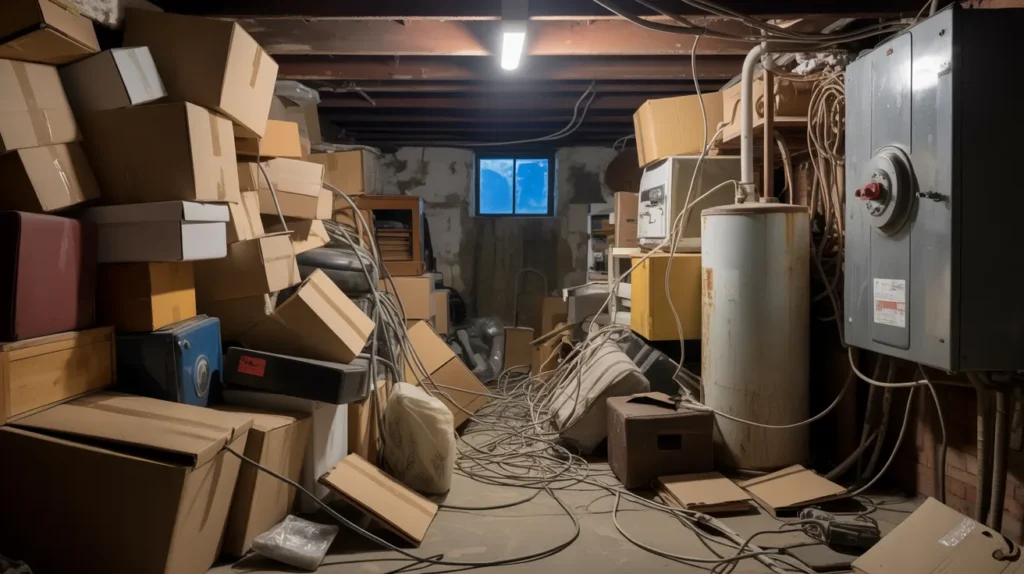
Overloaded outlets and extension cords: When wall outlets are hidden behind accumulated items, families often rely on extension cords and power strips that become overloaded and overheat.
Heat source obstruction: Space heaters, appliances, and electrical equipment need clearance for proper ventilation. Accumulated items too close to heat sources create fire ignition risks.
Damaged cord concealment: When electrical cords run under or through accumulated items, damage from weight or movement often goes unnoticed until electrical fires develop.
Maintenance prevention: Cluttered areas prevent regular inspection and cleaning of electrical systems, allowing dangerous conditions to develop undetected.
Rural Illinois Fire Safety Considerations
Rural properties around Alton and throughout Illinois present unique fire safety challenges because of longer emergency response times and different heating/electrical systems:
- Extended response times: Rural fire departments may need 15-20 minutes to reach properties, making self-evacuation and immediate fire suppression critical for survival.
- Alternative heating sources: Rural homes often use wood stoves, fireplaces, or space heaters that require careful clearance maintenance, which is impossible in cluttered environments.
- Outbuilding fire spread: Rural properties often have multiple structures, and fires that start in cluttered garages, barns, or storage buildings can spread to primary residences.
- Water supply limitations: Rural fire suppression often depends on on-site water sources that may be inadequate for extended firefighting, making prevention even more critical.
Smoke Detection and Alarm System Hazards
- Blocked detector access: Accumulated items often prevent regular smoke detector battery changes and testing, leaving families unprotected without realizing it.
- Alarm sound obstruction: Dense accumulation can muffle smoke alarm sounds, preventing family members from hearing warnings in time to escape safely.
- Detection delay: Clutter can interfere with the smoke detector’s function by blocking the air circulation needed for proper smoke detection.
Emergency Access: When Seconds Save Lives
Emergency access represents one of the most critical home safety hazards in cluttered environments, as it affects every type of emergency, including medical, fire, security, or natural disasters.
Why Emergency Responders Fear Cluttered Homes
- Delayed patient access: Paramedics report that cluttered homes significantly delay their ability to reach patients, provide treatment, and transport critical cases to hospitals.
- Equipment transport difficulties: Emergency medical equipment, stretchers, oxygen tanks, and defibrillators require clear pathways that cluttered homes often can’t provide.
- Scene safety assessment: Emergency responders need to quickly assess environments for additional hazards, which becomes impossible when accumulated items obscure their view.
- Evacuation assistance: When emergency responders need to help family members evacuate, cluttered pathways make assisted evacuation dangerous for both responders and residents.
The Two-Exit Rule and Clutter Reality
Fire safety codes require homes to have two accessible exits for good reason; if one exit becomes blocked by fire, smoke, or debris, families need alternative escape routes. But clutter often eliminates this safety redundancy:
- Primary exit obstruction: Front doors blocked by accumulated items force families to rely on single exit routes during emergencies.
- Secondary exit concealment: Back doors, patio doors, and basement exits hidden behind accumulated items become unavailable during crises.
- Window access prevention: Bedroom windows that should serve as emergency exits become inaccessible when accumulated items block the approach or prevent window operation.
- Pathway confusion: Even when exits remain technically available, cluttered pathways can cause confusion and delay during high-stress emergencies.
Medical Emergency Access Challenges
Cardiac event response: Heart attacks and strokes require immediate paramedic access with heavy equipment. Cluttered pathways that might seem manageable for daily use become impossible when seconds matter.
Fall injury access: When clutter causes serious falls, the resulting injuries often occur in areas where accumulated items prevent easy access for emergency treatment.
Mobility assistance: Family members with mobility issues face double jeopardy, higher fall risk from cluttered navigation, plus delayed help when accidents occur.
Regional Safety Patterns: Missouri and Illinois Specific Concerns
Our experience across Missouri and Illinois has revealed regional patterns in how clutter creates safety hazards based on climate, housing types, and lifestyle factors:
Missouri Weather-Related Safety Hazards
Tornado season preparation: Missouri’s tornado season requires families to access safe areas quickly, but cluttered basements and interior rooms often prevent safe shelter access.
Ice storm power outages: When winter storms cause power outages, cluttered homes become dangerous to navigate without standard lighting, and alternative heating sources become fire hazards.
Flood preparation: Missouri flood zones require quick elevation of belongings and potential evacuation, but cluttered homes prevent rapid response to flood warnings.
Seasonal equipment rotation: The twice-yearly transition between heating and cooling equipment creates a temporary accumulation that blocks safety equipment access.
Illinois Rural Safety Considerations
Agricultural equipment hazards: Rural Illinois properties often accumulate farm equipment and tools that create cut and crush hazards, especially for children.
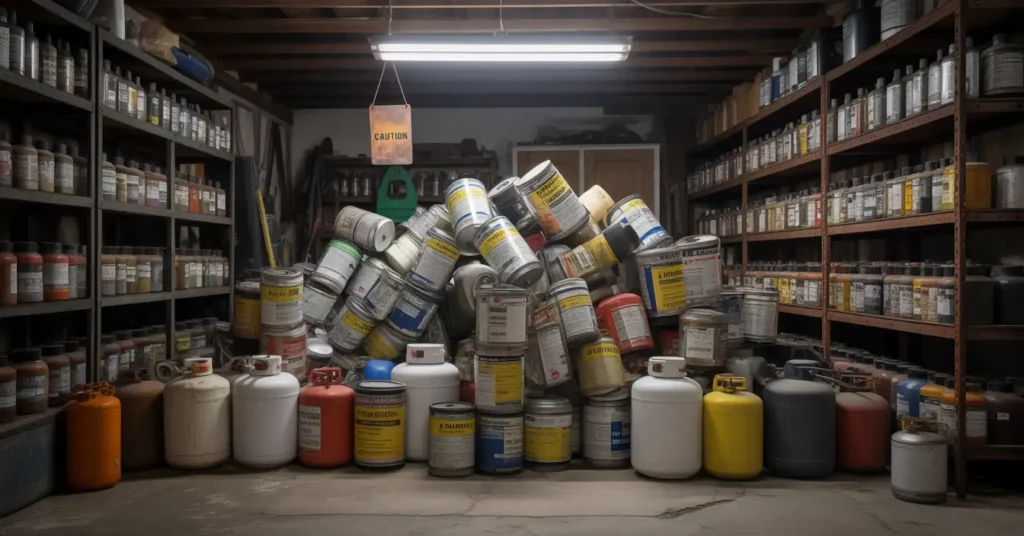
Propane and fuel storage: Rural homes often store heating fuel and propane that require careful clearance and ventilation, which is impossible in cluttered storage areas.
Well and septic access: Rural utilities require periodic access for maintenance and emergency repairs that cluttered areas often prevent.
Wildlife intrusion: Accumulated items provide shelter for rodents and other pests that create health hazards and attract larger predators.
Urban Density Safety Multipliers
Neighbor proximity: Urban safety hazards affect neighboring properties when fires spread or emergency response is delayed.
Building code enforcement: Urban properties face inspection and code enforcement that rural properties might avoid, creating legal consequences for safety violations.
Shared utility systems: Urban homes often share electrical, plumbing, or HVAC systems, where one property’s safety hazards can affect the entire building.
Health and Sanitation Hazards: The Hidden Safety Threats
Beyond obvious physical dangers, cluttered homes create health and sanitation hazards that develop gradually but can cause serious long-term health consequences:
Air Quality and Respiratory Safety
- Dust accumulation: Accumulated items collect dust and allergens that become airborne when disturbed, creating respiratory hazards for family members with asthma or allergies.
- Mold growth: Clutter often conceals moisture problems that lead to mold growth, creating serious respiratory and immune system health hazards.
- Chemical off-gassing: Accumulated plastics, furniture, and materials often release chemicals into the home air that become concentrated in poorly ventilated, cluttered areas.
- Pest-related allergens: Rodents and insects attracted to cluttered areas leave droppings and debris that create serious respiratory and disease transmission hazards.
Food Safety and Kitchen Hazards
- Expired food concealment: Cluttered pantries and refrigerators often conceal expired food that creates bacterial growth and attracts pests.
- Cleaning prevention: Cluttered kitchens can’t be adequately cleaned, allowing bacterial growth on surfaces where food is prepared.
- Appliance malfunction: Accumulated items around kitchen appliances prevent proper ventilation and maintenance, creating fire and food safety hazards.
Bathroom and Personal Hygiene Safety
- Mold and mildew growth: Cluttered bathrooms trap moisture and prevent proper ventilation, creating serious mold problems that affect respiratory health.
- Slip and fall multiplication: Bathrooms already present slip hazards that multiply when accumulated items create obstacles around toilets, showers, and sinks.
- Plumbing access prevention: Cluttered bathrooms prevent access to shut-off valves and plumbing that might need emergency attention during leaks or clogs.

Professional Safety Assessment: When DIY Becomes Dangerous
Sometimes the safest approach to cluttered home safety hazards is recognizing when professional assessment and clearing becomes essential for family protection:
When Professional Safety Assessment Becomes Critical
- Multiple safety systems are affected: When clutter impacts electrical, plumbing, heating, and egress systems simultaneously, professional coordination ensures that all safety issues are addressed systematically.
- Structural integrity concerns: Heavy accumulation can affect floor joists, wall supports, and foundation elements that require professional evaluation for safety.
- Hazardous material presence: Many cluttered homes contain paint, chemicals, asbestos, or other materials that require special handling for safe removal.
- Family member mobility issues: When elderly or disabled family members live in cluttered environments, a professional assessment ensures their specific safety needs get prioritized.
The MrJunk® Safety-First Approach
Our teams receive specific training in recognizing and addressing safety hazards because we understand that clearing cluttered homes involves more than just removing items; we’re eliminating dangers that could seriously harm families.
- Safety equipment and protocols: Every crew brings safety equipment, including protective gear, proper lighting, and the necessary tools to address hazards safely during clearing.
- Systematic hazard identification: We assess properties for safety hazards before beginning work and prioritize clearing based on risk levels rather than convenience.
- Emergency access prioritization: Exit routes and emergency access always get cleared first, regardless of what other work families might prefer us to prioritize.
- Documentation and recommendations: We document safety hazards we encounter and can recommend follow-up inspections for electrical, structural, or other safety concerns that need professional attention.
Coordinating with Safety Professionals
- Fire department consultation: We can coordinate with local fire departments to conduct safety inspections after clearing, providing families with professional validation of their fire safety improvements.
- Electrical and plumbing assessment: We work with local contractors to address electrical or plumbing safety issues discovered during clearing projects.
- Structural evaluation: When clearing reveals potential structural damage from overloading, we can recommend qualified inspectors to ensure ongoing safety.
- Insurance coordination: We provide documentation needed for insurance companies when safety improvements affect coverage or claims.
The Quick Safety Transformation: How Fast Professional Clearing Eliminates Hazards
One of the most dramatic aspects of professional cluttered home clearing is how quickly multiple safety hazards get eliminated simultaneously:
Day One Safety Improvements
Exit route clearing: Within hours of starting work, emergency exit routes become accessible and clearly marked.
Fall hazard elimination: Cluttered pathways and stairways get cleared systematically, eliminating the most common injury risks immediately.
Fire load reduction: Accumulated flammable materials get removed quickly, reducing fire fuel load and improving fire safety dramatically.
Electrical access restoration: Outlets, panels, and electrical equipment become accessible for inspection and proper use.
Day Two Complete Safety Restoration
Full emergency access: Paramedics and firefighters can navigate through your home quickly and safely.
System maintenance capability: You can access and maintain all home safety systems, including smoke detectors, circuit breakers, water shut-offs, and HVAC equipment.
Clear sight lines: You can see and identify potential safety problems before they become serious hazards.
Stable storage: Remaining items get stored correctly in ways that won’t create future safety hazards.
Long-term Safety Maintenance
Regular inspection capability: Clear spaces enable regular safety inspections, which prevent problems from developing.
Quick response readiness: Your home becomes ready for any emergency that might arise.
Peace of mind: Family members can move through your home confidently without constantly watching for hazards.

Frequently Asked Questions About Home Safety Hazards and Professional Solutions
How quickly can professional clearing eliminate serious safety hazards, and what gets prioritized first during the process?
Emergency exit routes and fall hazards get eliminated within the first few hours of professional clearing because these represent the most immediate threats to family safety. We follow a systematic safety-first protocol that prioritizes hazards based on their potential for causing serious injury or death.
- First priority (Hours 1-2): All emergency exits get cleared completely, front doors, back doors, patio doors, and basement exits. If there’s a fire or medical emergency, your family needs multiple ways out immediately.
- Second priority (Hours 2-4): Main pathways and stairways get cleared to eliminate fall hazards. This includes hallways, stairs to upper levels, and bathroom access routes that family members use multiple times daily.
- Third priority (Day 1 completion): Fire safety hazards, including overloaded electrical areas, heat source clearance, and flammable material removal. We also restore access to circuit breakers, water shut-offs, and other emergency controls.
- Final priorities (Day 2): Complete clearing that allows access to all home safety systems, including smoke detectors, HVAC equipment, and plumbing, for ongoing maintenance and inspection.
From Columbia to St. Louis, families consistently tell us they had no idea how many safety hazards they were living with until we systematically eliminated them. The relief of knowing your home is safe for every family member, from toddlers to grandparents, happens much faster than most people expect.
Are cluttered home safety hazards severe enough to justify professional clearing costs, or are you exaggerating the risks?
The safety hazards are absolutely real and documented by emergency responders, insurance companies, and safety organizations throughout Missouri and Illinois. We’re not exaggerating; if anything, most families underestimate how serious these risks have become until something goes wrong.
- Fire department statistics: Local fire departments report that blocked exits and cluttered escape routes are contributing factors in preventable fire deaths every year across our service areas.
- Insurance claim data: Insurance companies increasingly deny claims when clutter contributes to accidents, fires, or injuries because courts recognize these as preventable hazards.
- Emergency responder reports: Paramedics and firefighters document delayed response times in cluttered homes that directly impact patient outcomes and emergency resolution.
- Hospital emergency room patterns: Emergency rooms throughout Missouri and Illinois treat clutter-related fall injuries daily, with older adults experiencing the most serious complications.
The cost of professional clearing is minimal compared to medical bills from serious falls, fire damage from electrical hazards, or insurance claim denials from preventable accidents. Most families spend more on their monthly cable bill than professional clearing costs, but clearing provides permanent safety improvements while cable provides temporary entertainment.
From our A&E “Hoarders” experience to everyday family safety situations, we’ve seen how quickly cluttered homes can go from “manageable” to dangerous. Professional assessment often reveals hazards that families have stopped noticing because they’ve gradually adapted to living with daily risks.
What specific safety hazards do you encounter most frequently in Missouri and Illinois homes, and which ones surprise families the most?
Electrical fire hazards surprise families most because they develop hidden behind accumulated items, where families can’t see the warning signs. We regularly discover overloaded power strips buried under items, extension cords damaged by weight or movement, and electrical panels blocked by accumulated storage.
Most common safety hazards we encounter:
- Blocked emergency exits (85% of cluttered homes): Back doors, patio doors, and basement exits blocked by accumulated items, leaving families with single escape routes during emergencies.
- Overloaded electrical systems (70% of cluttered homes): Hidden power strips, daisy-chained extension cords, and outlets blocked by accumulated items creating serious fire hazards.
- Unstable stacked items (60% of cluttered homes): Boxes, furniture, and equipment stacked in ways that could fall and seriously injure family members, especially children.
- HVAC system obstruction (50% of cluttered homes): Furnaces, water heaters, and air conditioning units blocked by storage, creating fire hazards and preventing emergency access.
Regional patterns we’ve identified:
- Missouri tornado preparation: Many families can’t access their basement safe areas quickly because of accumulated storage, which could be fatal during tornado warnings.
- Rural Illinois heating hazards: Wood stoves and alternative heating sources blocked by accumulated items, creating serious fire risks during winter months.
- Lake property seasonal hazards: Dock equipment, boats, and recreational gear stored in ways that block emergency vehicle access during peak vacation periods.
- Urban St. Louis building code violations: Cluttered common areas and blocked exits that violate city safety codes and could result in fines or forced evacuation.
The hazards that surprise families most are often the ones they’ve lived with longest—they’ve gradually adapted to navigating around dangers without realizing how serious the risks have become.
Can you work safely in hazardous, cluttered environments, and what if you discover serious structural or electrical problems during clearing?
Yes, our crews are specifically trained and equipped to work safely in hazardous, cluttered environments because we understand that safety hazards are often the reason families need professional help in the first place. We come prepared with proper safety equipment and protocols for the conditions we expect to encounter.
Our safety equipment and training include:
- Personal protective equipment: Hard hats, safety glasses, steel-toed boots, cut-resistant gloves, and respiratory protection for all crew members working in potentially hazardous conditions.
- Proper lighting: Industrial lighting equipment to illuminate dark, cluttered areas safely and identify hazards that might not be visible under normal lighting conditions.
- Structural assessment training: Crew leaders receive training in recognizing structural damage, overloading, and stability issues that might require professional evaluation.
- Electrical safety protocols: Teams know how to identify and work around electrical hazards, including when to shut off power and when to stop work pending professional electrical inspection.
- Hazardous material recognition: Training in identifying asbestos, lead paint, mold, chemicals, and other materials that require specialized handling.
When we discover serious problems during clearing:
- Immediate safety concerns: We stop work in affected areas and secure them to prevent exposure to families until appropriate professionals can address the issues.
- Structural damage: We document damage with photos and can recommend qualified structural engineers or contractors for professional evaluation.
- Electrical hazards: We coordinate with licensed electricians to address wiring problems, overloaded circuits, or damaged electrical systems before continuing work in affected areas.
- Plumbing problems, such as water damage, leaks, or sewage issues, require professional referrals to prevent health hazards and further property damage.
We’ve worked with local professionals throughout Missouri and Illinois to develop relationships with qualified contractors who can address serious problems we discover during clearing. Our goal is to ensure your family’s safety both during our work and long after we’re finished.
How do you handle situations where family members disagree about safety priorities, especially when elderly parents resist clearing for safety reasons?
Family disagreements about safety priorities require tremendous sensitivity, as they often involve complex emotions surrounding independence, family roles, and challenging life transitions. We’ve developed specific approaches for navigating these sensitive situations, with everyone’s safety as our primary concern.
Common family safety disagreement patterns:
- Adult children vs. elderly parents: Children see serious safety hazards, while parents see independence and familiar surroundings; they’re reluctant to change.
- Spouse disagreements: One partner recognizes safety risks while the other focuses on the potential value or emotional attachment of accumulated items.
- Multi-generational conflicts: Different generations have different tolerance levels for clutter and different perspectives on what constitutes acceptable safety risk.
Our family-sensitive approach:
- Safety education without pressure: We explain specific hazards and risks we observe without pressuring anyone to make immediate decisions they’re not ready for.
- Gradual safety improvement options: For families not ready for complete clearing, we can focus on critical safety areas first—exit routes, electrical hazards, and fall prevention, while leaving less essential areas for later decisions.
- Independence preservation: We work to improve safety while preserving as much independence and familiar environment as possible, especially for elderly family members.
- Family mediation: We often serve as neutral parties who can help families focus on shared safety goals rather than getting stuck in disputes about individual items or approaches.
- Compromise solutions: Sometimes the best approach is to address the most serious safety hazards immediately while developing longer-term plans for comprehensive safety improvement.
From Columbia to Alton, we’ve worked with families where initial resistance transformed into gratitude once safety improvements allowed family members to move confidently through their homes again. The key is working at a pace that feels respectful while ensuring critical safety issues get addressed promptly.
How can professional clearing help prevent future safety hazards, and what maintenance strategies keep homes safe long-term?
Professional clearing establishes the foundation for long-term home safety by creating clear baselines and functional systems that enable ongoing safety maintenance. The key is developing sustainable strategies that prevent safety hazards from redeveloping over time.
Immediate safety system restoration:
- Emergency access maintenance: Once exit routes are clear, families can easily maintain them by establishing “nothing in the pathway” rules that prevent gradual re-accumulation.
- Electrical system visibility: Clear access to outlets, panels, and electrical equipment allows regular inspection and prevents the hidden electrical hazards that develop when systems are concealed.
- Fire safety system function: Clear access to smoke detectors, fire extinguishers, and emergency equipment ensures these systems can be tested and maintained regularly.
- HVAC and utility access: Professional clearing restores access to heating, cooling, and plumbing systems that require periodic maintenance for safe operation.
Long-term safety maintenance strategies:
- Monthly safety walks: Once homes are clear, families can do quick monthly safety inspections to identify and address potential hazards before they become serious problems.
- Seasonal safety preparation: Clear storage areas allow proper seasonal equipment rotation without creating temporary safety hazards during transitions.
- Emergency preparedness: Clear homes can accommodate emergency supplies, evacuation planning, and disaster preparedness that cluttered homes can’t support.
- Professional inspection capability: Clear homes allow fire departments, electricians, and other safety professionals to perform inspections and maintenance that keep homes safe over time.
Family education and awareness:
- Hazard recognition training: After seeing how many safety hazards cluttered conditions created, families become much better at recognizing and preventing future safety problems.
- Safety-first decision making: The experience of professional safety clearing often shifts family priorities toward maintaining safety rather than accommodating accumulation.
- Emergency planning capability: Clear homes allow families to develop and practice emergency plans that work in real crises.
From our experience across Missouri and Illinois, families who invest in professional safety clearing typically maintain much higher safety standards in the long term because they’ve experienced the peace of mind that comes with knowing their homes protect rather than endanger their families.
Ready to eliminate safety hazards and protect your family?
Call us today for a free safety assessment:
- Columbia & Central Missouri: (573) 886-JUNK (5865)
- Lake Ozark & Jefferson City: (573) 886-JUNK (5865)
- St. Louis, St. Charles & Alton, IL: (314) 673-JUNK (5865)
Text us for immediate response: Same numbers work for texting—send photos of areas you’re concerned about and we’ll provide immediate safety feedback.
Complete our online safety assessment request at MrJunk.org for free estimates focused on eliminating safety hazards.
Don’t wait for an accident to happen. Professional safety assessment and clearing is probably more affordable than you think, and it’s definitely less expensive than emergency room visits, fire damage, or insurance claim denials.
Share this article with family members who might not realize how serious cluttered home safety hazards have become.
Remember: Your family’s safety is worth more than any accumulated items. Every day you wait is another day your loved ones face preventable risks in their own home.
Because when Missouri and Illinois families need to protect what matters most, they call the safety professionals who’ve been eliminating home hazards for over 20 years.